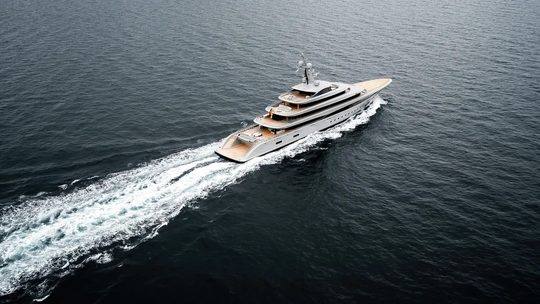
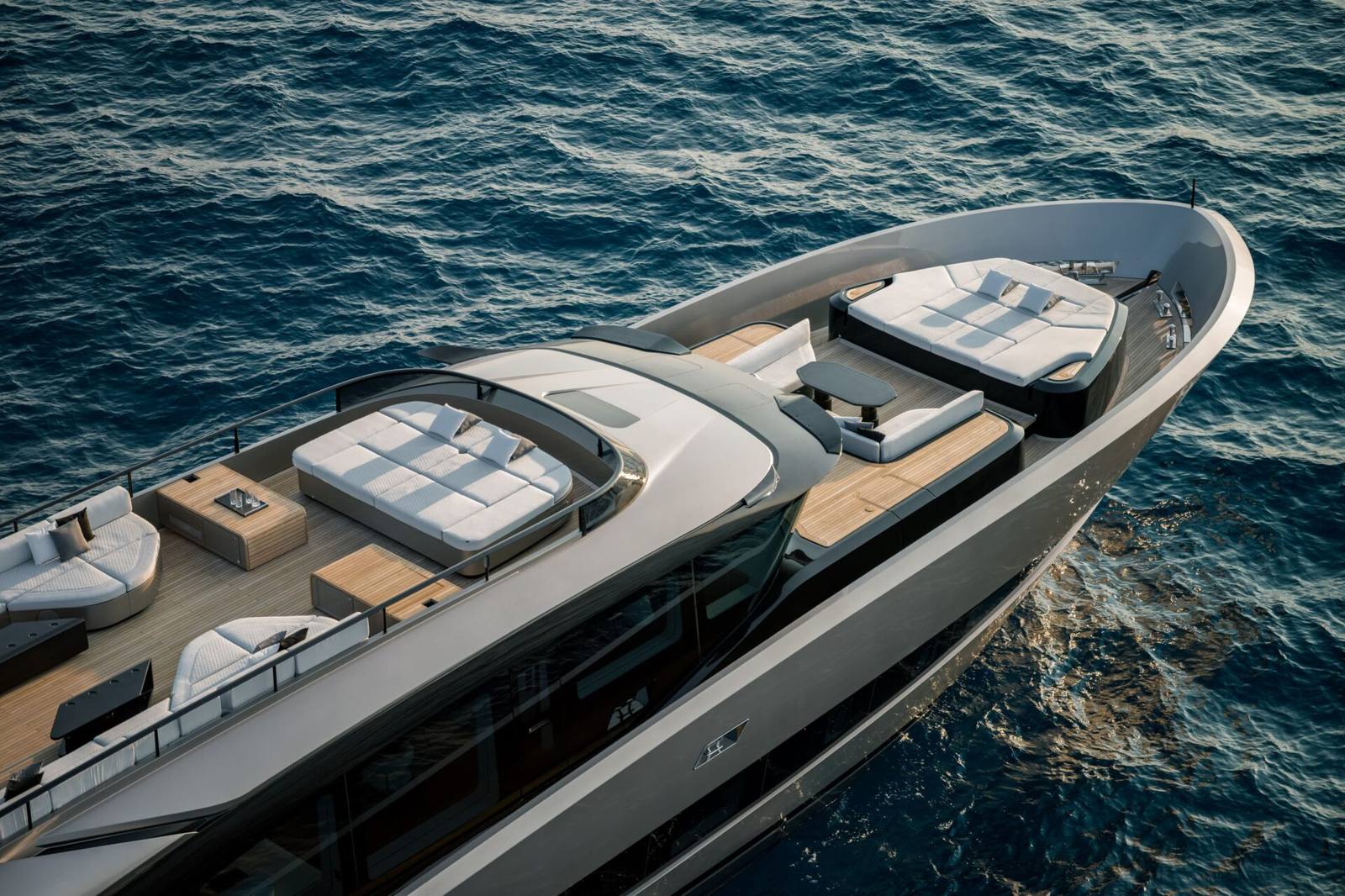
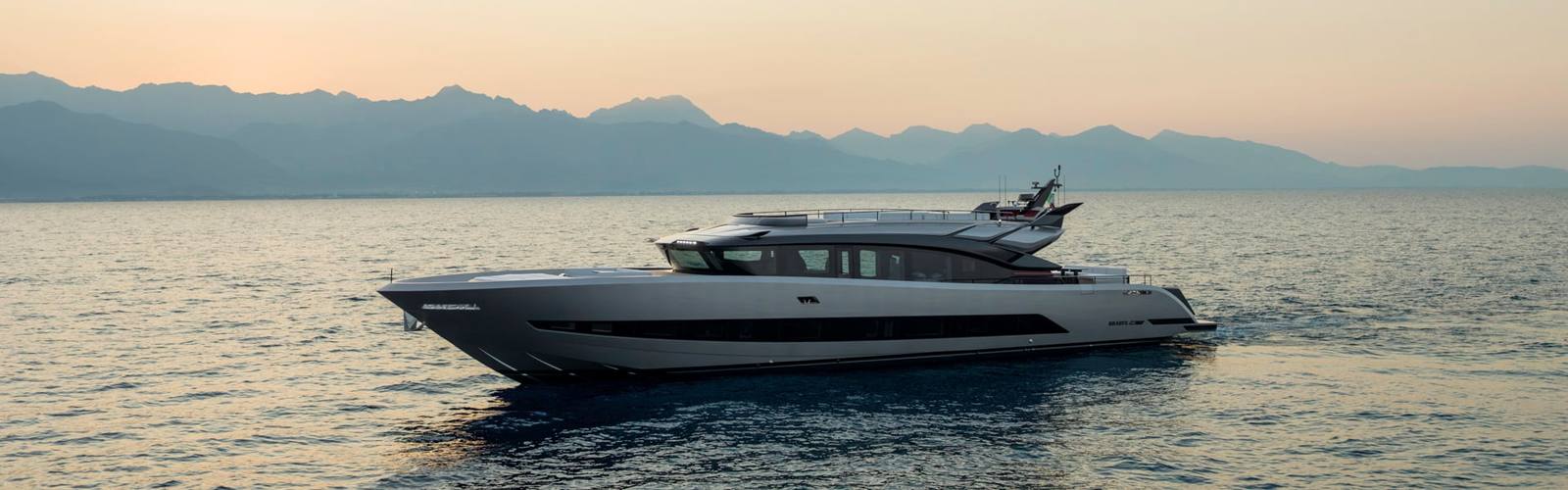
BRABUS used the 2026 Monaco Yacht Show to do something it has never done before: unveil a superyacht. The AB110, a 33.70-metre build developed with the Italian shipyard AB Yachts, is the German tuner’s first superyacht, and the first result of a strategic partnership the two companies announced in July 2026. It arrives exactly as the brand’s reputation would suggest: loud on performance, obsessive on materials.
The machinery is pure BRABUS. Three MTU 16V 2000 M96L engines produce a combined 7,800 horsepower, driving waterjets for a claimed 48-knot top speed. The cruise figure is almost as startling: 41 knots at 90 percent engine load, with a stated range of 370 nautical miles at that pace. Gyro stabilization is specified to keep the ride civilised both underway and at anchor. In the 33-metre class, these numbers are a genuine provocation. Most yachts of this length are displacement or semi-displacement cruisers that top out in the twenties; a 48-knot capability puts the AB110 in the company of the fastest yachts afloat, closer to a maxi chase boat than to the flybridge norm.
The hull and superstructure are composite construction, 6.80 metres of beam on a 1.30-metre draft, and the exterior wears its automotive parentage openly: exposed carbon-fibre front wings, an illuminated roof spoiler, integrated LED lighting, and red accents. This is not a yacht with BRABUS badges applied; it is the marque’s design language translated to water, with the same aggressive visual presence as the company’s cars.
The Masterpiece interior
Below decks, the BRABUS Masterpiece philosophy shapes the cabin through materials, finishes, and signature details. The main deck centres on two large sofas and a dining area seating eight, while the helm gets a bespoke BRABUS steering wheel and a driver’s seat upholstered in Masterpiece leather with the marque’s Triangle quilting. Four guest cabins on the lower deck sleep up to ten, including an owner’s suite with ensuite bathroom and dressing area, two further ensuite guest cabins, and a separate VIP suite. Two crew cabins house four crew, with galley and crew mess close by.
The three-deck arrangement leans hard into outdoor living. A large forward sunpad and seating area occupy the main deck, with another social space toward the stern, while the upper sun deck doubles as a flybridge with two large sunpads, port and starboard seating, and carbon-fibre tables. Retractable secondary helm controls are integrated into the starboard storage unit for harbour manoeuvring, disappearing when not needed. At the stern, an integrated garage carries a jet tender and a full-size three-seat Jet Ski plus paddleboards and snorkelling gear; once the toys are launched, the aft platform becomes a sea-level beach area and lounge directly above the water.
A range, not a one-off
The AB110 is the first of a three-model range. The smaller 28.45-metre AB95 will join it, and the 150-foot AB150 is scheduled for its world premiere at the Monaco Yacht Show in 2027, coinciding with BRABUS’s 50th anniversary. That sequencing matters more than any single specification. A one-off show yacht is marketing; a three-model range with a flagship timed to a semicentennial is a business plan. BRABUS is signalling that it intends to be a yacht brand, not a car brand that once built a boat.
The collaboration also reveals how BRABUS thinks about entering new categories. The company already had marine work behind it with Axopar and Sunreef Yachts; the AB Yachts partnership, combining BRABUS’s design identity with the yard’s decades of high-performance engineering, is the step from collaboration to ownership. It is the same playbook the car industry has used for decades when entering adjacent categories: pair the badge with a builder that already knows the engineering.
What the 48 knots really mean
Speed in yachting is usually a compromise: the faster the yacht, the shorter the range, the harder the ride, the louder the statement. A 33.7-metre yacht capable of 48 knots, cruising at 41 with a 370-mile reach, is aimed squarely at the owner who treats the journey as the point, the Mediterranean equivalent of the autobahn run. Whether the market wants a BRABUS-badged version of that experience is the question the order book will now answer.
There is precedent for the bet working. The performance dayboat segment has been one of the healthiest corners of the market for a decade, and the buyers who spec 800-horsepower SUVs are not hard to imagine at the helm of a 48-knot weekender with a jet tender in the transom garage. BRABUS is not converting sailors; it is giving its existing clientele a reason to stay inside the brand when they go to sea.
Watch the AB150 in September 2027. If the 45-metre flagship lands on schedule for the 50th anniversary, BRABUS will have done in three models what takes most new yacht brands a decade: establish a recognisable design language with a clear performance promise. The AB110 is the opening argument; the range is the thesis.
Photography: Courtesy of AB Yachts.