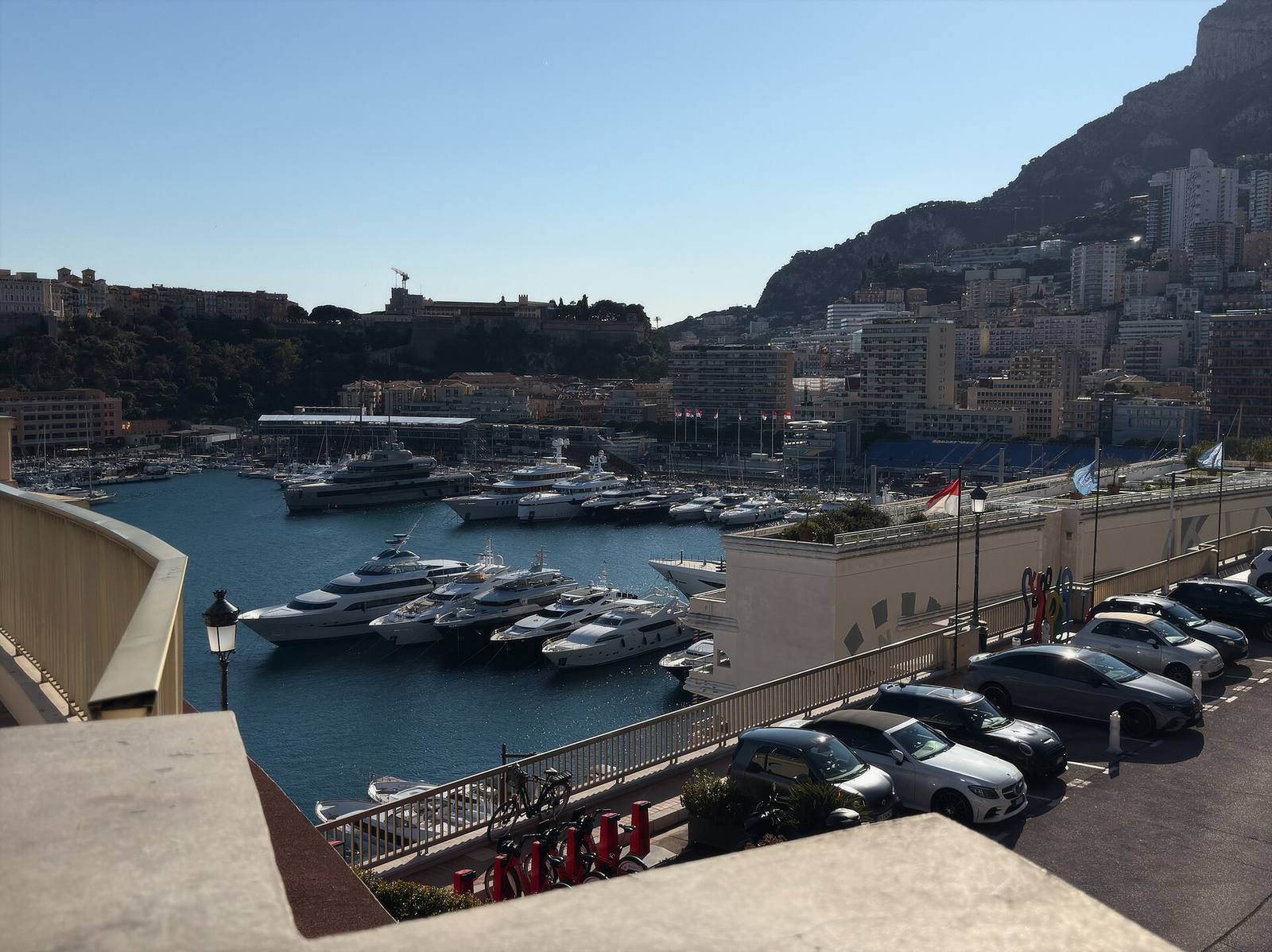
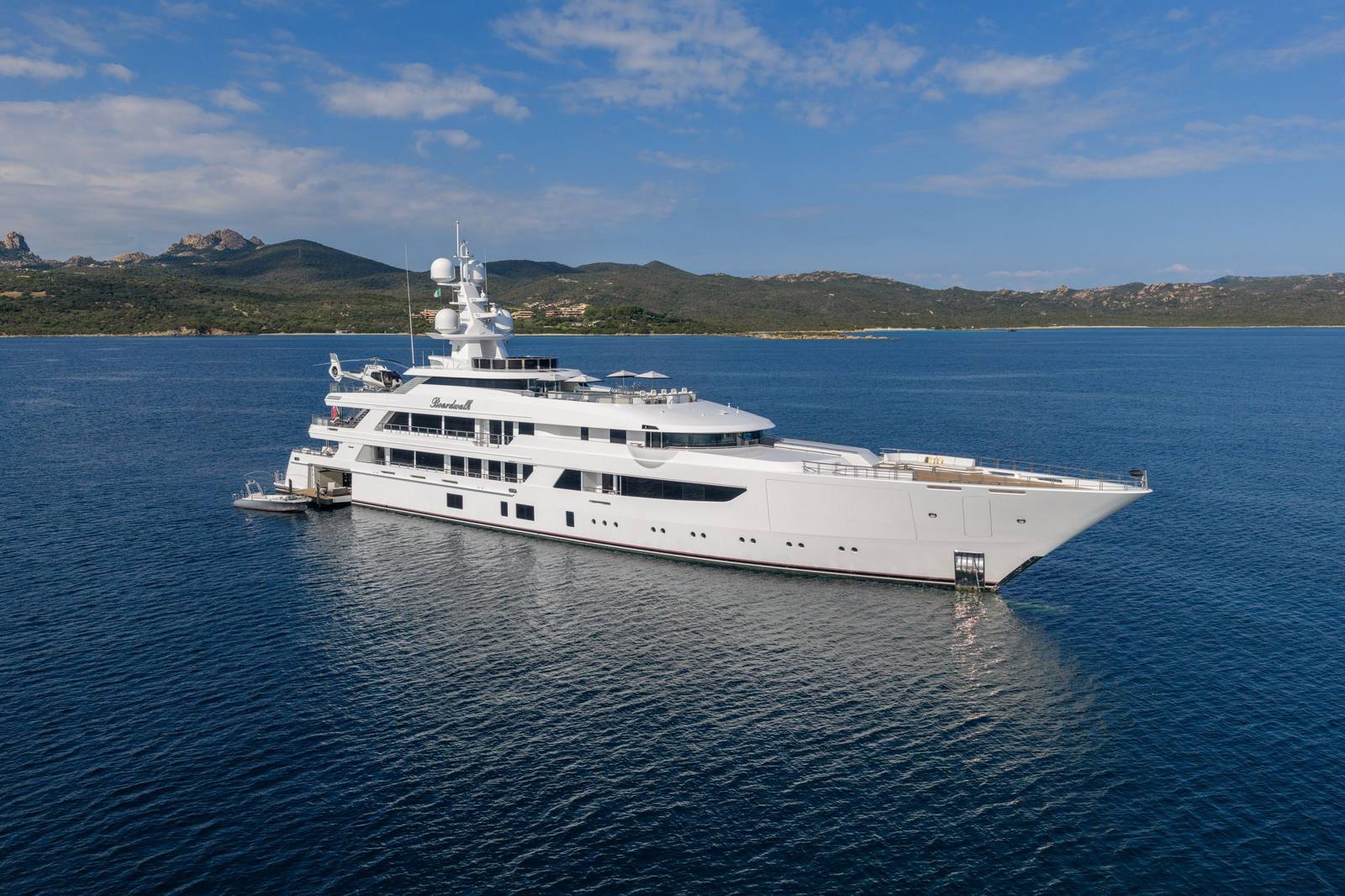
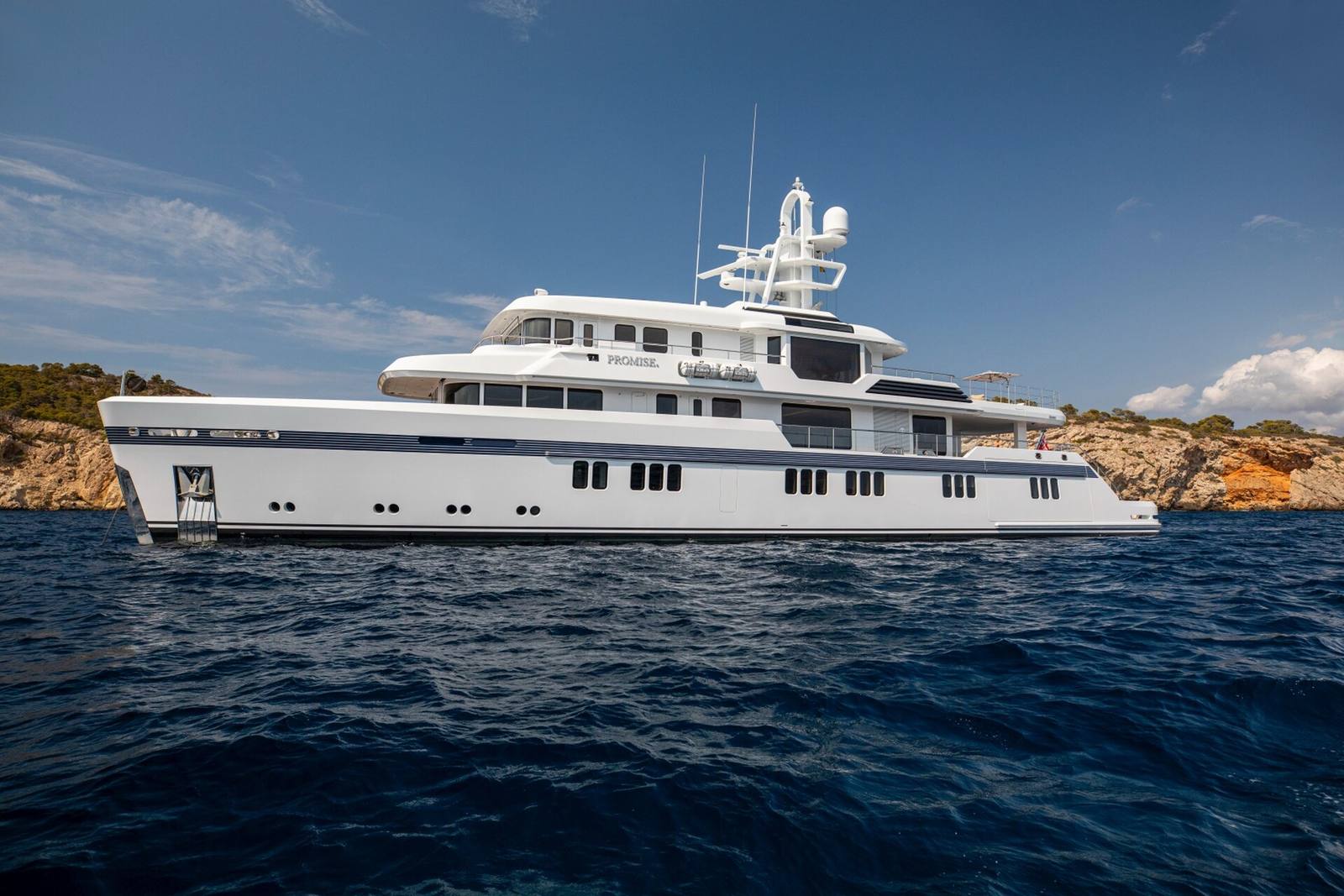
The autumn brokerage market has a clear message for sellers, and it is written in seven figures. The 76.5-metre Feadship Boardwalk V, listed with Burgess and Y.CO, took a €14 million price reduction to €135 million ahead of the Monaco Yacht Show. The 51-metre Feadship explorer Promise was cut by €5 million at the show. These are not distressed sales; they are the market’s price-discovery mechanism working in public.
The cuts extend down the size range. The 34-metre Mulder Solis, listed with Edmiston, dropped €1 million to €8,995,000. The 39.6-metre Abeking & Rasmussen sailing yacht 4K fell €800,000 to €7,700,000. The 27-metre Sunseeker 90 Ocean Aurelius, a 2024 build still under full builder’s warranty, was cut €755,000 to €6,495,000 after a €1 million reduction in June.
Fewer boats, bigger boats
Set those cuts against the shape of the fleet on offer at Monaco. The 2026 show’s brokerage fleet counted 113 yachts above 24 metres, down from 115 last year and 118 in 2024, with a combined length of 5,472 metres. The average length held at 48.4 metres, but the average volume rose to 685 gross tons from 650. The fleet for sale is shrinking in number and growing in size: fewer boats, bigger boats, more volume per hull.
That is the two-speed market in one statistic. The yachts attracting attention are large, recent, and voluminous; the stock requiring seven-figure cuts to move is older, smaller, or both. Buyers in 2026 are not short of money, but they are short of patience for yesterday’s pricing.
The volume figure deserves a second look. Average tonnage rising from 650 to 685 gross tons while the count falls means the yachts leaving the market are the smaller ones and the yachts staying are the larger ones. This is not a market in retreat; it is a market concentrating. The middle of the fleet, the 30-to-40-metre production yachts that carried the boom years, is where the discounting clusters. The top end, where Boardwalk V sits, corrects by single-digit percentages and moves on.
There is a longer cycle at work here too. The yachts taking the largest cuts are, almost without exception, yachts bought at the top of the 2021-2023 surge, when waiting lists pushed buyers toward whatever was available. Those sellers are now competing with the new-build slots that have since opened and with the next generation of designs. The market is not punishing them; it is repricing the surge premium out of the fleet, one seven-figure cut at a time.
Meanwhile, the order books fill
The contrast with new build could hardly be sharper. September brought the sale of the first 40.6-metre unit from Benetti’s new B.Neos 40M series, a full-hybrid design, scheduled for delivery in spring 2028. And a 125-metre-plus Lürssen superyacht, designed by Espen Øino and RWD, was sold with construction to begin in Bremen and delivery slated for May 2032. Read that date again: 2032. At the very top of the market, buyers are committing to yachts they will not see for six years.
This is the second speed of the market, and it explains the first. When a buyer can order a 125-metre custom Lürssen for 2032 delivery, a five-year-old brokerage yacht at a 2024 price is not competing with other brokerage yachts; it is competing with a new build. The cuts are the mechanism by which the secondary market stays relevant against order books that stretch into the next decade.
What honest pricing looks like
There is nothing unhealthy about any of this. A €14 million reduction on a €149 million asking price is a correction of roughly nine percent: the difference between a 2024 price and a 2026 price on a large custom yacht. The Aurelius cuts, totalling nearly €1.8 million across two reductions on a 2024 build, are the sharper signal: even nearly-new production yachts are not exempt from the repricing.
The calendar ahead
Timing matters as much as pricing. The Fort Lauderdale International Boat Show opens on 28 October, the largest in-water show in the world and the American market’s serious shopping week. Behind it sits the Antigua Charter Yacht Show in early December, which sets the Caribbean winter season. A seller who reprices now catches the full American buying season; a seller who waits until January is selling into the quietest quarter of the year.
The autumn of 2026 will be remembered as the season the brokerage market stopped pretending. The cuts were large, public, and concentrated on exactly the yachts the fleet data says buyers want least: older, smaller, yesterday’s money. The yachts that moved did so on honest numbers, and the order books at the top filled into the 2030s. Two speeds, one lesson: price for the water you are in.
Photography: Courtesy of Burgess.